
International trade isn’t just about shipping containers and customs paperwork; it’s the lifeblood of global economies and the secret sauce behind your favorite imported snacks. Ever wondered how that exotic fruit made it to your local grocery store? Or why your smartphone has parts from five different countries? It’s all part of the intricate dance of international trade, where countries swap goods and services like kids trading baseball cards.
In a world that’s more connected than ever, understanding international trade is crucial. It shapes markets, influences job creation, and even affects the price of your morning coffee. So grab your passport and get ready to explore the fascinating world of trade, where every transaction tells a story and every deal has the potential to change economies. Whether you’re a business owner or just a curious consumer, this journey into international trade promises to be both enlightening and entertaining.
Overview of International Trade
International trade encompasses the exchange of goods and services across borders. It enables countries to specialize in the production of certain products while relying on others for different items. This exchange benefits economies by increasing market access, fostering innovation, and encouraging competition.
Trade networks connect regions, allowing them to exploit their resources and capabilities efficiently. The World Trade Organization notes that global merchandise trade volume grew by 5.7% in 2021, illustrating its dynamic nature. Each participating country gains exposure to diverse markets, stimulating economic growth and stability.
Moreover, international trade impacts consumer choices. It contributes to lower prices by introducing competition, enhancing the shopping experience. Diverse products, from technology to food, find their way into markets, showcasing the interconnectedness of economies.
Exchange rates influence trade flows significantly. Volatile currency values can either enhance or hinder a country’s competitiveness. When a currency appreciates, exports may decline as products become more expensive for foreign buyers. Conversely, a depreciating currency can boost exports by making goods cheaper internationally.
Trade agreements play a crucial role in shaping international trade. These agreements, such as free trade pacts, reduce tariffs and barriers, promoting smoother transactions. The United States, Mexico, and Canada Agreement is one example that fosters collaboration among North America.
Furthermore, international trade affects employment. It creates job opportunities in export-oriented industries while prompting workers to adapt in other sectors. Understanding these dynamics is essential in today’s global economy, where trade decisions reverberate across borders.
Importance of International Trade
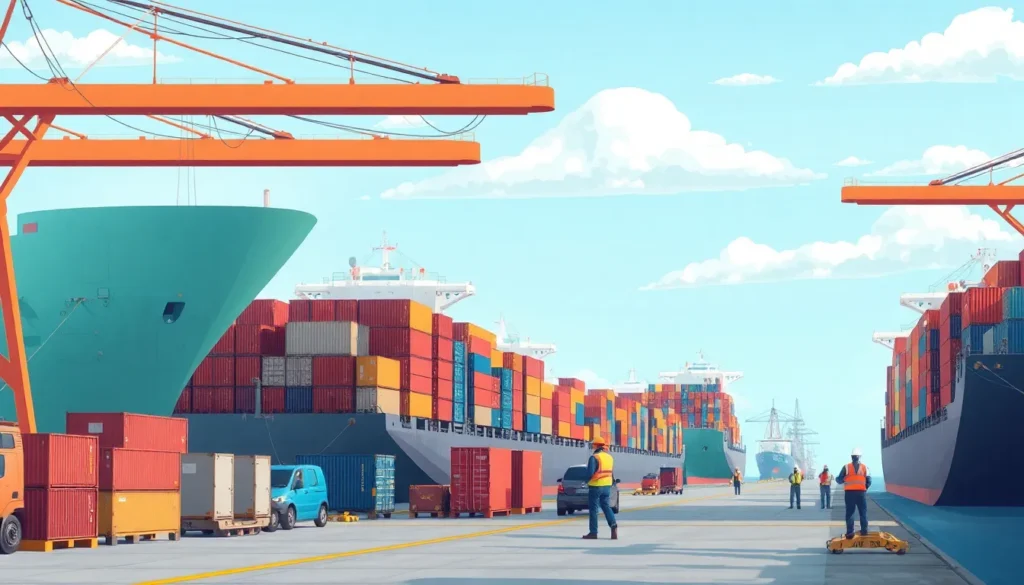
International trade serves as a cornerstone for economic development and consumer welfare, impacting daily lives in various ways.
Economic Growth
Economic growth rises as countries engage in international trade. Exchange of goods and services expands markets, allowing nations to specialize efficiently. Countries that focus on competitive industries experience a boost in productivity. Trade increases access to diverse products, promoting innovation and technological advancement. In 2021, global merchandise trade volume grew by 5.7%, underscoring the dynamic nature of these exchanges. Economic stability benefits when nations diversify their markets, reducing reliance on domestic production. Enhanced trade relationships can lead to improved infrastructure, as countries invest in transportation and logistics to facilitate smoother transactions.
Job Creation
Job creation thrives alongside international trade opportunities. Export-oriented industries often see significant employment growth in sectors like manufacturing or agriculture. Workers gain access to a wider array of job opportunities due to expanding markets. Moreover, trade agreements help facilitate these processes, encouraging businesses to grow and hire more employees. For instance, the United States, Mexico, and Canada Agreement promotes stability and opens new avenues for employment. New jobs often emerge in logistics, transportation, and services sectors that support trade activities. Industries undergo transformation, requiring workforce adaptation and upskilling to meet evolving demands.
Challenges in International Trade
International trade faces several challenges impacting its efficiency and effectiveness. These challenges can hinder economic growth and market access for countries around the world.
Trade Barriers
Trade barriers significantly obstruct free trade among nations. Tariffs, quotas, and import restrictions create hurdles that increase costs and limit market access. For instance, a 25% tariff on imported goods can discourage foreign products, making domestic alternatives seem more appealing. Non-tariff barriers, like regulatory approvals and compliance standards, add complexity to trade processes, causing delays and increased costs. Understanding these barriers is vital for businesses aiming to expand internationally. They can affect pricing strategies, consumer choices, and ultimately a country’s competitiveness in the global market.
Political Factors
Political factors shape the landscape of international trade. Changes in government policies, trade agreements, and diplomatic relations can alter trade dynamics rapidly. A recent shift in trade policy can result in higher tariffs imposed on imports from specific countries, affecting supply chains. Political instability in a trading partner can lead to uncertainty, making companies wary of entering or expanding in that market. Additionally, sanctions imposed for political reasons can restrict access to certain goods and services. Businesses must stay informed about political climates to navigate international trade landscapes effectively.
Trends in International Trade
International trade continues to evolve, shaped by technological advancements and growing concerns for sustainability.
Digital Trade
Digital trade transforms traditional methods of commerce. E-commerce platforms enable businesses to reach global markets with lower barriers. Online transactions surged, accounting for 19% of global retail sales in 2021, demonstrating urgency for companies to adopt digital strategies. The rise of digital currencies and blockchain technology also enhances transaction security. Furthermore, companies invest significantly in digital infrastructure to streamline operations and improve customer experiences. Global standards for data flows and privacy regulations play a crucial role in shaping digital trade policies. As such, adapting to these changes has become vital for staying competitive.
Sustainability in Trade
Sustainable practices increasingly influence international trade. Many consumers prefer eco-friendly products, prompting companies to adopt greener supply chain processes. The global market for sustainable goods has grown substantially, reaching $1 trillion in 2021. Environmental regulations also push businesses to minimize their carbon footprints. Adopting sustainable practices not only meets consumer demand but also enhances brand reputation. Additionally, international agreements like the Paris Agreement drive nations to implement policies promoting sustainable trade. Companies prioritizing sustainability are better positioned to thrive in an evolving trade landscape.
International trade plays a crucial role in shaping economies and enhancing consumer choices. As countries navigate the complexities of global markets they must adapt to emerging trends and challenges. The dynamic nature of trade fosters innovation and competition while also presenting obstacles that require strategic solutions.
Businesses that stay informed and agile can harness the opportunities that international trade offers. By embracing technological advancements and sustainability practices they can position themselves for success in an interconnected world. Understanding the intricacies of trade not only benefits economies but also enriches the lives of consumers everywhere.